The Ontario Portal


Ontario is the southernmost province of Canada. Located in Central Canada, Ontario is the country's most populous province. As of the 2021 Canadian census, it is home to over 14 million people, which is 38.5% of the country's population. Ontario is the second-largest province by total area (after Quebec) and the fourth-largest jurisdiction of all the Canadian provinces and territories. It is home to the nation's capital, Ottawa, and its most populous city, Toronto, which is Ontario's provincial capital.
Ontario is bordered by the province of Manitoba to the west, Hudson Bay and James Bay to the north, and Quebec to the east and northeast. To the south, it is bordered by the U.S. states of (from west to east) Minnesota, Michigan, Ohio, Pennsylvania (through Lake Erie), and New York. Almost all of Ontario's 2,700-kilometre (1,700 mi) border with the United States follows rivers and lakes: from the westerly Lake of the Woods, eastward along the major rivers and lakes of the Great Lakes drainage system. There is only about one kilometre (0.62 mi) of actual land border, made up of portages including Height of Land Portage on the Minnesota border.
The great majority of Ontario's population and arable land are in Southern Ontario, and while agriculture remains a significant industry, the region's economy depends highly on manufacturing. In contrast, Northern Ontario is sparsely populated with cold winters and heavy forestation, with mining and forestry making up the region's major industries. (Full article...)
Selected article -
The Don Valley Parkway (DVP) is a municipal expressway in Toronto, Ontario, Canada, which connects the Gardiner Expressway in downtown Toronto with Highway 401. North of Highway 401, it continues as Highway 404. The parkway runs through the parklands of the Don River valley, after which it is named. It has a maximum speed limit of 90 kilometres per hour (56 mph) for its entire length of 15.0 kilometres (9.3 mi). It is six lanes for most of its length, with eight lanes north of York Mills Road and four lanes south of Eastern Avenue. As a municipal road, it is patrolled by the Toronto Police Service.
The parkway was the second expressway to be built by Metropolitan Toronto (Metro) after the Gardiner Expressway. Planning began in 1954, the year of Metro's formation. The first section opened during 1961 and the entire route was completed to Sheppard Avenue by the end of 1966. South of Bloor Street, the parkway was constructed over existing roadways. North of Bloor Street, it was built on a new alignment through the valley, requiring the removal of several hills, diversion of the Don River and the clearing of woodland. North of Eglinton Avenue, the parkway follows the former Woodbine Avenue right-of-way north to Highway 401. A proposed extension to Steeles Avenue was instead taken over by the province and built as Highway 404, which also absorbed the Metro-built segment between Sheppard and Highway 401. The parkway was planned to be one of several municipal and provincial north–south expressways into downtown Toronto. The others, the Spadina Expressway (Allen Road) and a proposed southern extension of Highway 400 were truncated due to public opposition, leaving the parkway as the sole north–south expressway connecting downtown to the northern areas of Metro; the only other complete north-south freeway connecting to the Gardiner Expressway is Highway 427 at Toronto's west end.
Traffic conditions on the parkway often exceed its intended capacity of 60,000 vehicles per day. Today, some sections carry an average of 100,000 vehicles a day and have bumper-to-bumper traffic conditions during commuting hours. The parkway is also used by regional transit buses which can access designated lanes to pass slow-moving traffic. Locals refer to the parkway as the "Don Valley Parking Lot" due to slow-moving, congested traffic. (Full article...)
General images


 Image 5Typical Great Lakes beach (from Southern Ontario)
 Image 6Ottawa in 2005 (from Southern Ontario)

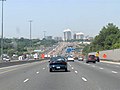
 Image 10North Bay is often considered to be the "Gateway" to Northern Ontario (from Northern Ontario)


 Image 14Forests, lakes, and rivers dominate much of the Northern Ontario landscape. (from Northern Ontario)


.jpg)
Surrounding areas
Selected biography -
Mathew Charles "Matt" Lamb (5 January 1948 – 7 November 1976) was a Canadian spree killer who, in 1967, avoided Canada's then-mandatory death penalty for capital murder by being found not guilty by reason of insanity. Abandoned by his teenage mother soon after his birth in Windsor, Ontario, Lamb had an abusive upbringing at the hands of his step-grandfather, leading him to become emotionally detached from his relatives and peers. He developed violent tendencies that manifested themselves in his physical assault of a police officer at the age of 16 in February 1964, and his engaging in a brief shoot-out with law enforcement ten months later. After this latter incident he spent 14 months, starting in April 1965, at Kingston Penitentiary, a maximum security prison in eastern Ontario.
Seventeen days after his release from jail in June 1966, Lamb took a shotgun from his uncle's house and went on a shooting spree around his East Windsor neighbourhood, killing two strangers and wounding two others. He was charged with capital murder, which under the era's Criminal Code called for a mandatory death penalty, but he avoided this fate when the court found, in January 1967, that he had not been sane at the time of the incident. He was committed for an indefinite time in a psychiatric unit. Over the course of six years in care at Penetanguishene Mental Health Centre's Oak Ridge facility he displayed a profound recovery, prompting an independent five-man committee to recommend to the Executive Council of Ontario that he be released, saying that he was no longer a danger to society. The Council approved Lamb's release in early 1973 on the condition that he spend a year living and working under the supervision of one of Oak Ridge's top psychiatrists, Elliot Barker. (Full article...)
Selected image

 Image 2A panoramic view of Hamilton, Ontario
 Image 3The CN Tower, located in downtown Toronto, Ontario, Canada, is a communications and observation tower standing 553.3 metres (1,815 ft) tall.
 Image 4A view of Ruskview, Ontario in 2017, an unincorporated rural community in Mulmur Township, Dufferin County, Ontario
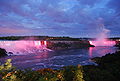 Image 5The Niagara Falls are voluminous waterfalls on the Niagara River, straddling the international border between the Canadian province of Ontario and the U.S. state of New York.

 Image 8Waterloo, Ontario taken from the North East corner of the Uptown Parkade


.jpg)


Did you know? -
- ... that artefacts discovered at the Donaldson archaeological site in Ontario include a child's necklace made with bear teeth?
Related projects and portals
Topics
Categories

Things you can do
- Help expand stub articles: There are numerous stub articles relating to Ontario. You can help by expanding them. See Ontario stubs for a list. Also, for geographical (places) stubs, refer to:
- Eastern Ontario: Eastern Ontario geography stubs
- Toronto: Toronto geography stubs
- Ottawa: Ottawa stubs - All stubs relating to Ottawa in general
- Northern Ontario: Northern Ontario geography stubs
- Western Ontario: Western Ontario geography stubs
- Golden Horseshoe: Golden Horseshoe geography stubs
Associated Wikimedia -
The following Wikimedia Foundation sister projects provide more on this subject:
-
 Commons
Free media repository -
 Wikidata
Free knowledge base -
 Wikiquote
Collection of quotations -
 Wikisource
Free-content library -
 Wikiversity
Free learning tools -
 Wikivoyage
Free travel guide -
 Wiktionary
Dictionary and thesaurus


