
Fulani architecture is the architecture of the Fula people, who primarily live in West Africa and the Sahel. Fulani architecture differs depending on the community, as Fula communities vary between nomadic, sedentary, and semi nomadic lifestyles.[1]

Settled Fulani architecture
Settled Fula communities build permanent buildings, usually made of mud and earth. The buildings have thatched roofs, often enclosed with a fence. Traditional mosques like the Dingueraye mosque, combine Fulani architectural styles with islamic influences.[1]
 Fula village in Fouta djallon
 Fula people in front of a hut
 Fula people standing in front of a building, potentially a mosque
 Traditional Fulani architecture
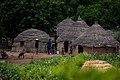 Fulani Settlement


.jpg)
Nomadic Fulani architecture
Nomadic Fula communities usually use movable shelters made of woven grass and mud, and smaller buildings, as they are always moving with their livestock.[2]
 Fulani family, moveable shelter
 Fulani moveable shelter
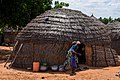 Fulani Moveable shelter
 Fulani village
.jpg)
.jpg)
.jpg)

References
- DeLancey, Mark Dike (2014-06-03). "Localizing Fulbe Architecture". Islamic Africa. 5 (1): 1–43. doi:10.5192/21540993050101. ISSN 0803-0685.
- Kahera, Akel I. (1987-01-01). Exegesis of the Hausa and Fulani models (Thesis). Massachusetts Institute of Technology, Dept. of Architecture.