In mathematics, particularly in functional analysis, a seminorm is like a norm but need not be positive definite. Seminorms are intimately connected with convex sets: every seminorm is the Minkowski functional of some absorbing disk and, conversely, the Minkowski functional of any such set is a seminorm.
A topological vector space is locally convex if and only if its topology is induced by a family of seminorms.
Definition
Let
X
{\displaystyle X}


- Subadditivity[1]/Triangle inequality:
p
(
x
+
y
)
≤
p
(
x
)
+
p
(
y
)
{\displaystyle p(x+y)\leq p(x)+p(y)}
for all x , y ∈ X . {\displaystyle x,y\in X.}
- Absolute homogeneity:[1]
p
(
s
x
)
=
|
s
|
p
(
x
)
{\displaystyle p(sx)=|s|p(x)}
for all x ∈ X {\displaystyle x\in X}
and all scalars s . {\displaystyle s.}

These two conditions imply that
p
(
0
)
=
0
{\displaystyle p(0)=0}


- Nonnegativity:[1]
p
(
x
)
≥
0
{\displaystyle p(x)\geq 0}
for all x ∈ X . {\displaystyle x\in X.}
Some authors include non-negativity as part of the definition of "seminorm" (and also sometimes of "norm"), although this is not necessary since it follows from the other two properties.
By definition, a norm on
X
{\displaystyle X}
- Positive definite/Positive[1]/Point-separating: whenever
x
∈
X
{\displaystyle x\in X}
then x = 0. {\displaystyle x=0.}

A seminormed space is a pair
(
X
,
p
)
{\displaystyle (X,p)}


Since absolute homogeneity implies positive homogeneity, every seminorm is a type of function called a sublinear function. A map
p
:
X
→
R
{\displaystyle p:X\to \mathbb {R} }
Examples
- The trivial seminorm on
X
,
{\displaystyle X,}
which refers to the constant 0 {\displaystyle 0}
map on X , {\displaystyle X,}
- Let
μ
{\displaystyle \mu }
be a measure on a space Ω {\displaystyle \Omega }
. For an arbitrary constant c ≥ 1 {\displaystyle c\geq 1}
, let X {\displaystyle X}
for which ‖ f ‖ c := ( ∫ Ω | f | c d μ ) 1 / c {\displaystyle \lVert f\rVert _{c}:=\left(\int _{\Omega }|f|^{c}\,d\mu \right)^{1/c}}
exists and is finite. It can be shown that X {\displaystyle X}
is a seminorm on X {\displaystyle X}
and μ {\displaystyle \mu }
does not always imply h = 0 {\displaystyle h=0}
. To make ‖ ⋅ ‖ c {\displaystyle \lVert \cdot \rVert _{c}}
with ‖ h ‖ c = 0 {\displaystyle \lVert h\rVert _{c}=0}
, has a norm induced by ‖ ⋅ ‖ c {\displaystyle \lVert \cdot \rVert _{c}}
- If
f
{\displaystyle f}
is any linear form on a vector space then its absolute value | f | , {\displaystyle |f|,}
defined by x ↦ | f ( x ) | , {\displaystyle x\mapsto |f(x)|,}
is a seminorm.
- A sublinear function
f
:
X
→
R
{\displaystyle f:X\to \mathbb {R} }
on a real vector space X {\displaystyle X}
for all x ∈ X . {\displaystyle x\in X.}
- Every real-valued sublinear function
f
:
X
→
R
{\displaystyle f:X\to \mathbb {R} }
[2]
- Any finite sum of seminorms is a seminorm. The restriction of a seminorm (respectively, norm) to a vector subspace is once again a seminorm (respectively, norm).
- If
p
:
X
→
R
{\displaystyle p:X\to \mathbb {R} }
are seminorms (respectively, norms) on X {\displaystyle X}
then the map r : X × Y → R {\displaystyle r:X\times Y\to \mathbb {R} }
defined by r ( x , y ) = p ( x ) + q ( y ) {\displaystyle r(x,y)=p(x)+q(y)}
is a seminorm (respectively, a norm) on X × Y . {\displaystyle X\times Y.}
In particular, the maps on X × Y {\displaystyle X\times Y}
defined by ( x , y ) ↦ p ( x ) {\displaystyle (x,y)\mapsto p(x)}
and ( x , y ) ↦ q ( y ) {\displaystyle (x,y)\mapsto q(y)}
are both seminorms on X × Y . {\displaystyle X\times Y.}
- If
p
{\displaystyle p}
are seminorms on X {\displaystyle X}
and ( p ∧ q ) ( x ) := inf { p ( y ) + q ( z ) : x = y + z with y , z ∈ X } {\displaystyle (p\wedge q)(x):=\inf\{p(y)+q(z):x=y+z{\text{ with }}y,z\in X\}}
where p ∧ q ≤ p {\displaystyle p\wedge q\leq p}
and p ∧ q ≤ q . {\displaystyle p\wedge q\leq q.}
[4]
- The space of seminorms on
X
{\displaystyle X}
, p ( x , y ) := max ( | x | , | y | ) , q ( x , y ) := 2 | x | , r ( x , y ) := 2 | y | {\displaystyle p(x,y):=\max(|x|,|y|),q(x,y):=2|x|,r(x,y):=2|y|}
are such that ( ( p ∨ q ) ∧ ( p ∨ r ) ) ( x , y ) = inf { max ( 2 | x 1 | , | y 1 | ) + max ( | x 2 | , 2 | y 2 | ) : x = x 1 + x 2 and y = y 1 + y 2 } {\displaystyle ((p\vee q)\wedge (p\vee r))(x,y)=\inf\{\max(2|x_{1}|,|y_{1}|)+\max(|x_{2}|,2|y_{2}|):x=x_{1}+x_{2}{\text{ and }}y=y_{1}+y_{2}\}}
while ( p ∨ q ∧ r ) ( x , y ) := max ( | x | , | y | ) {\displaystyle (p\vee q\wedge r)(x,y):=\max(|x|,|y|)}
- If
L
:
X
→
Y
{\displaystyle L:X\to Y}
is a linear map and q : Y → R {\displaystyle q:Y\to \mathbb {R} }
then q ∘ L : X → R {\displaystyle q\circ L:X\to \mathbb {R} }
is a seminorm on X . {\displaystyle X.}
will be a norm on X {\displaystyle X}
is injective and the restriction q | L ( X ) {\displaystyle q{\big \vert }_{L(X)}}
is a norm on L ( X ) . {\displaystyle L(X).}


Minkowski functionals and seminorms
Seminorms on a vector space
X
{\displaystyle X}


Algebraic properties
Every seminorm is a sublinear function, and thus satisfies all properties of a sublinear function, including convexity,
p
(
0
)
=
0
,
{\displaystyle p(0)=0,}


For any vector
x
∈
X
{\displaystyle x\in X}


If
p
{\displaystyle p}


Other properties of seminorms
Every seminorm is a balanced function.
A seminorm
p
{\displaystyle p}
If
p
:
X
→
[
0
,
∞
)
{\displaystyle p:X\to [0,\infty )}



Furthermore, for any real
r
>
0
,
{\displaystyle r>0,}


If
D
{\displaystyle D}


If
(
X
,
‖
⋅
‖
)
{\displaystyle (X,\|\,\cdot \,\|)}


Every norm is a convex function and consequently, finding a global maximum of a norm-based objective function is sometimes tractable.
Relationship to other norm-like concepts
Let
p
:
X
→
R
{\displaystyle p:X\to \mathbb {R} }
-
p
{\displaystyle p}
-
p
{\displaystyle p}
-seminorm.
-
p
{\displaystyle p}
If any of the above conditions hold, then the following are equivalent:
-
p
{\displaystyle p}
-
{
x
∈
X
:
p
(
x
)
<
1
}
{\displaystyle \{x\in X:p(x)<1\}}
- There exists a norm on
X
,
{\displaystyle X,}
If
p
{\displaystyle p}
-
p
{\displaystyle p}
-
p
(
x
)
+
p
(
−
x
)
≤
0
for every
x
∈
X
{\displaystyle p(x)+p(-x)\leq 0{\text{ for every }}x\in X}
;
-
p
(
x
)
+
p
(
−
x
)
=
0
for every
x
∈
X
{\displaystyle p(x)+p(-x)=0{\text{ for every }}x\in X}
;
Inequalities involving seminorms
If
p
,
q
:
X
→
[
0
,
∞
)
{\displaystyle p,q:X\to [0,\infty )}

-
p
≤
q
{\displaystyle p\leq q}
if and only if q ( x ) ≤ 1 {\displaystyle q(x)\leq 1}
implies p ( x ) ≤ 1. {\displaystyle p(x)\leq 1.}
[11]
- If
a
>
0
{\displaystyle a>0}
and b > 0 {\displaystyle b>0}
are such that p ( x ) < a {\displaystyle p(x)<a}
implies q ( x ) ≤ b , {\displaystyle q(x)\leq b,}
then a q ( x ) ≤ b p ( x ) {\displaystyle aq(x)\leq bp(x)}
for all x ∈ X . {\displaystyle x\in X.}
[12]
- Suppose
a
{\displaystyle a}
and b {\displaystyle b}
are positive real numbers and q , p 1 , … , p n {\displaystyle q,p_{1},\ldots ,p_{n}}
are seminorms on X {\displaystyle X}
then q ( x ) < b . {\displaystyle q(x)<b.}
Then a q ≤ b ( p 1 + ⋯ + p n ) . {\displaystyle aq\leq b\left(p_{1}+\cdots +p_{n}\right).}
[10]
- If
X
{\displaystyle X}
[11]
If
p
{\displaystyle p}
-
|
f
|
≤
p
{\displaystyle |f|\leq p}
on X {\displaystyle X}
on X {\displaystyle X}
-
f
≤
p
{\displaystyle f\leq p}
[6][11]
- If
a
>
0
{\displaystyle a>0}
then a | f ( x ) | ≤ b p ( x ) {\displaystyle a|f(x)|\leq bp(x)}
for all x ∈ X . {\displaystyle x\in X.}
Hahn–Banach theorem for seminorms
Seminorms offer a particularly clean formulation of the Hahn–Banach theorem:
- If
M
{\displaystyle M}
is a vector subspace of a seminormed space ( X , p ) {\displaystyle (X,p)}
then f {\displaystyle f}
[15]
A similar extension property also holds for seminorms:
Theorem[16][12] (Extending seminorms)—If
M
{\displaystyle M}


- Proof: Let
S
{\displaystyle S}
be the convex hull of { m ∈ M : p ( m ) ≤ 1 } ∪ { x ∈ X : q ( x ) ≤ 1 } . {\displaystyle \{m\in M:p(m)\leq 1\}\cup \{x\in X:q(x)\leq 1\}.}
Then S {\displaystyle S}
on M {\displaystyle M}
on X . {\displaystyle X.}

Topologies of seminormed spaces
Pseudometrics and the induced topology
A seminorm
p
{\displaystyle p}


Equivalently, every vector space
X
{\displaystyle X}


Any seminorm-induced topology makes
X
{\displaystyle X}


Stronger, weaker, and equivalent seminorms
The notions of stronger and weaker seminorms are akin to the notions of stronger and weaker norms. If
p
{\displaystyle p}
- The topology on
X
{\displaystyle X}
- If
x
∙
=
(
x
i
)
i
=
1
∞
{\displaystyle x_{\bullet }=\left(x_{i}\right)_{i=1}^{\infty }}
is a sequence in X , {\displaystyle X,}
in R {\displaystyle \mathbb {R} }
in R . {\displaystyle \mathbb {R} .}
[4]
- If
x
∙
=
(
x
i
)
i
∈
I
{\displaystyle x_{\bullet }=\left(x_{i}\right)_{i\in I}}
is a net in X , {\displaystyle X,}
in R {\displaystyle \mathbb {R} }
-
p
{\displaystyle p}
[4]
- If
inf
{
q
(
x
)
:
p
(
x
)
=
1
,
x
∈
X
}
=
0
{\displaystyle \inf {}\{q(x):p(x)=1,x\in X\}=0}
then p ( x ) = 0 {\displaystyle p(x)=0}
for all x ∈ X . {\displaystyle x\in X.}
- There exists a real
K
>
0
{\displaystyle K>0}
such that p ≤ K q {\displaystyle p\leq Kq}
on X . {\displaystyle X.}
The seminorms
p
{\displaystyle p}
- The topology on
X
{\displaystyle X}
-
q
{\displaystyle q}
[4]
- If
x
∙
=
(
x
i
)
i
=
1
∞
{\displaystyle x_{\bullet }=\left(x_{i}\right)_{i=1}^{\infty }}
- There exist positive real numbers
r
>
0
{\displaystyle r>0}
such that r q ≤ p ≤ R q . {\displaystyle rq\leq p\leq Rq.}


Normability and seminormability
A topological vector space (TVS) is said to be a seminormable space (respectively, a normable space) if its topology is induced by a single seminorm (resp. a single norm). A TVS is normable if and only if it is seminormable and Hausdorff or equivalently, if and only if it is seminormable and T1 (because a TVS is Hausdorff if and only if it is a T1 space). A locally bounded topological vector space is a topological vector space that possesses a bounded neighborhood of the origin.
Normability of topological vector spaces is characterized by Kolmogorov's normability criterion. A TVS is seminormable if and only if it has a convex bounded neighborhood of the origin.[17] Thus a locally convex TVS is seminormable if and only if it has a non-empty bounded open set.[18] A TVS is normable if and only if it is a T1 space and admits a bounded convex neighborhood of the origin.
If
X
{\displaystyle X}
-
X
{\displaystyle X}
-
X
{\displaystyle X}
-
X
{\displaystyle X}
- The strong dual
X
b
′
{\displaystyle X_{b}^{\prime }}
of X {\displaystyle X}
- The strong dual
X
b
′
{\displaystyle X_{b}^{\prime }}
Furthermore,
X
{\displaystyle X}


The product of infinitely many seminormable space is again seminormable if and only if all but finitely many of these spaces trivial (that is, 0-dimensional).[18]
Topological properties
- If
X
{\displaystyle X}
- The closure of
{
0
}
{\displaystyle \{0\}}
in a locally convex space X {\displaystyle X}
is equal to ⋂ p ∈ P p − 1 ( 0 ) . {\displaystyle \bigcap _{p\in {\mathcal {P}}}p^{-1}(0).}
[11]
- A subset
S
{\displaystyle S}
is bounded.[20]
- If
(
X
,
p
)
{\displaystyle (X,p)}
for all x , y ∈ X . {\displaystyle x,y\in X.}
[21]
- The product of infinitely many seminormable spaces is again seminormable if and only if all but finitely many of these spaces are trivial (that is, 0-dimensional).[18]
Continuity of seminorms
If
p
{\displaystyle p}
-
p
{\displaystyle p}
-
p
{\displaystyle p}
-
{
x
∈
X
:
p
(
x
)
<
1
}
{\displaystyle \{x\in X:p(x)<1\}}
-
{
x
∈
X
:
p
(
x
)
≤
1
}
{\displaystyle \{x\in X:p(x)\leq 1\}}
-
p
{\displaystyle p}
- There exists a continuous seminorm
q
{\displaystyle q}
[3]
In particular, if
(
X
,
p
)
{\displaystyle (X,p)}
If
X
{\displaystyle X}
Continuity of linear maps
If
F
:
(
X
,
p
)
→
(
Y
,
q
)
{\displaystyle F:(X,p)\to (Y,q)}


If
F
:
(
X
,
p
)
→
(
Y
,
q
)
{\displaystyle F:(X,p)\to (Y,q)}
-
F
{\displaystyle F}
-
‖
F
‖
p
,
q
<
∞
{\displaystyle \|F\|_{p,q}<\infty }
;[15]
- There exists a real
K
≥
0
{\displaystyle K\geq 0}
such that p ≤ K q {\displaystyle p\leq Kq}
- In this case,
‖
F
‖
p
,
q
≤
K
.
{\displaystyle \|F\|_{p,q}\leq K.}
- In this case,
‖
F
‖
p
,
q
≤
K
.
{\displaystyle \|F\|_{p,q}\leq K.}

If
F
{\displaystyle F}

The space of all continuous linear maps
F
:
(
X
,
p
)
→
(
Y
,
q
)
{\displaystyle F:(X,p)\to (Y,q)}

Generalizations
The concept of norm in composition algebras does not share the usual properties of a norm.
A composition algebra
(
A
,
∗
,
N
)
{\displaystyle (A,*,N)}


An ultraseminorm or a non-Archimedean seminorm is a seminorm
p
:
X
→
R
{\displaystyle p:X\to \mathbb {R} }

Weakening subadditivity: Quasi-seminorms
A map
p
:
X
→
R
{\displaystyle p:X\to \mathbb {R} }


A quasi-seminorm that separates points is called a quasi-norm on
X
.
{\displaystyle X.}
Weakening homogeneity -
k
{\displaystyle k}

A map
p
:
X
→
R
{\displaystyle p:X\to \mathbb {R} }


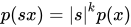
We have the following relationship between quasi-seminorms and
k
{\displaystyle k}
is a quasi-seminorm on a vector space
X
{\displaystyle X}
with multiplier
b
.
{\displaystyle b.}
 If
0
<
k
<
log
2
b
{\displaystyle 0<{\sqrt {k}}<\log _{2}b}
 then there exists
k
{\displaystyle k}
-seminorm
p
{\displaystyle p}
on
X
{\displaystyle X}
equivalent to
q
.
{\displaystyle q.}
See also
- Asymmetric norm – Generalization of the concept of a norm
- Banach space – Normed vector space that is complete
- Contraction mapping – Function reducing distance between all points
- Finest locally convex topology – Space with topology generated by convex setsPages displaying short descriptions of redirect targets
- Hahn-Banach theorem – Theorem on extension of bounded linear functionalsPages displaying short descriptions of redirect targets
- Gowers norm – Class of norms in additive combinatorics
- Locally convex topological vector space – Space with topology generated by convex sets
- Mahalanobis distance – Statistical distance measure
- Matrix norm – Norm on a vector space of matrices
- Minkowski functional – Function made from a set
- Norm (mathematics) – Length in a vector space
- Normed vector space – Vector space on which a distance is defined
- Relation of norms and metrics – Mathematical space with a notion of distancePages displaying short descriptions of redirect targets
- Sublinear function – Type of function in linear algebra
Notes
Proofs
- If
z
∈
X
{\displaystyle z\in X}
denotes the zero vector in X {\displaystyle X}
◼ {\displaystyle \blacksquare }
- Suppose
p
:
X
→
R
{\displaystyle p:X\to \mathbb {R} }
The triangle inequality now implies p ( 0 ) = p ( x + ( − x ) ) ≤ p ( x ) + p ( − x ) = p ( x ) + p ( x ) = 2 p ( x ) . {\displaystyle p(0)=p(x+(-x))\leq p(x)+p(-x)=p(x)+p(x)=2p(x).}
Because x {\displaystyle x}
was an arbitrary vector in X , {\displaystyle X,}
which implies that 0 ≤ p ( 0 ) {\displaystyle 0\leq p(0)}
(by subtracting p ( 0 ) {\displaystyle p(0)}
from both sides). Thus 0 ≤ p ( 0 ) ≤ 2 p ( x ) {\displaystyle 0\leq p(0)\leq 2p(x)}
which implies 0 ≤ p ( x ) {\displaystyle 0\leq p(x)}
(by multiplying through by 1 / 2 {\displaystyle 1/2}
). ◼ {\displaystyle \blacksquare }
- Let
x
∈
X
{\displaystyle x\in X}
It remains to show that p ( x + k ) = p ( x ) . {\displaystyle p(x+k)=p(x).}
The triangle inequality implies p ( x + k ) ≤ p ( x ) + p ( k ) = p ( x ) + 0 = p ( x ) . {\displaystyle p(x+k)\leq p(x)+p(k)=p(x)+0=p(x).}
Since p ( − k ) = 0 , {\displaystyle p(-k)=0,}
p ( x ) = p ( x ) − p ( − k ) ≤ p ( x − ( − k ) ) = p ( x + k ) , {\displaystyle p(x)=p(x)-p(-k)\leq p(x-(-k))=p(x+k),}
as desired. ◼ {\displaystyle \blacksquare }
References
- Kubrusly 2011, p. 200.
- Narici & Beckenstein 2011, pp. 120–121.
- Narici & Beckenstein 2011, pp. 116–128.
- Wilansky 2013, pp. 15–21.
- Schaefer & Wolff 1999, p. 40.
- Narici & Beckenstein 2011, pp. 177–220.
- Narici & Beckenstein 2011, pp. 116−128.
- Narici & Beckenstein 2011, pp. 107–113.
- Schechter 1996, p. 691.
- Narici & Beckenstein 2011, p. 149.
- Narici & Beckenstein 2011, pp. 149–153.
- Wilansky 2013, pp. 18–21.
- Obvious if
X
{\displaystyle X}
and t {\displaystyle t}
be real numbers such that f ( x ) = r e i t . {\displaystyle f(x)=re^{it}.}
Then | f ( x ) | = r = f ( e − i t x ) = Re ( f ( e − i t x ) ) ≤ p ( e − i t x ) = p ( x ) . {\displaystyle |f(x)|=r=f\left(e^{-it}x\right)=\operatorname {Re} \left(f\left(e^{-it}x\right)\right)\leq p\left(e^{-it}x\right)=p(x).}
- Wilansky 2013, p. 20.
- Wilansky 2013, pp. 21–26.
- Narici & Beckenstein 2011, pp. 150.
- Wilansky 2013, pp. 50–51.
- Narici & Beckenstein 2011, pp. 156–175.
- Trèves 2006, pp. 136–149, 195–201, 240–252, 335–390, 420–433.
- Wilansky 2013, pp. 49–50.
- Narici & Beckenstein 2011, pp. 115–154.

- Adasch, Norbert; Ernst, Bruno; Keim, Dieter (1978). Topological Vector Spaces: The Theory Without Convexity Conditions. Lecture Notes in Mathematics. Vol. 639. Berlin New York: Springer-Verlag. ISBN 978-3-540-08662-8. OCLC 297140003.
- Berberian, Sterling K. (1974). Lectures in Functional Analysis and Operator Theory. Graduate Texts in Mathematics. Vol. 15. New York: Springer. ISBN 978-0-387-90081-0. OCLC 878109401.
- Bourbaki, Nicolas (1987) [1981]. Topological Vector Spaces: Chapters 1–5. Éléments de mathématique. Translated by Eggleston, H.G.; Madan, S. Berlin New York: Springer-Verlag. ISBN 3-540-13627-4. OCLC 17499190.
- Conway, John B. (1990). A Course in Functional Analysis. Graduate Texts in Mathematics. Vol. 96 (2nd ed.). New York: Springer-Verlag. ISBN 978-0-387-97245-9. OCLC 21195908.
- Edwards, Robert E. (1995). Functional Analysis: Theory and Applications. New York: Dover Publications. ISBN 978-0-486-68143-6. OCLC 30593138.
- Grothendieck, Alexander (1973). Topological Vector Spaces. Translated by Chaljub, Orlando. New York: Gordon and Breach Science Publishers. ISBN 978-0-677-30020-7. OCLC 886098.
- Jarchow, Hans (1981). Locally convex spaces. Stuttgart: B.G. Teubner. ISBN 978-3-519-02224-4. OCLC 8210342.
- Khaleelulla, S. M. (1982). Counterexamples in Topological Vector Spaces. Lecture Notes in Mathematics. Vol. 936. Berlin, Heidelberg, New York: Springer-Verlag. ISBN 978-3-540-11565-6. OCLC 8588370.
- Köthe, Gottfried (1983) [1969]. Topological Vector Spaces I. Grundlehren der mathematischen Wissenschaften. Vol. 159. Translated by Garling, D.J.H. New York: Springer Science & Business Media. ISBN 978-3-642-64988-2. MR 0248498. OCLC 840293704.
- Kubrusly, Carlos S. (2011). The Elements of Operator Theory (Second ed.). Boston: Birkhäuser. ISBN 978-0-8176-4998-2. OCLC 710154895.
- Narici, Lawrence; Beckenstein, Edward (2011). Topological Vector Spaces. Pure and applied mathematics (Second ed.). Boca Raton, FL: CRC Press. ISBN 978-1584888666. OCLC 144216834.
- Prugovečki, Eduard (1981). Quantum mechanics in Hilbert space (2nd ed.). Academic Press. p. 20. ISBN 0-12-566060-X.
- Schaefer, Helmut H.; Wolff, Manfred P. (1999). Topological Vector Spaces. GTM. Vol. 8 (Second ed.). New York, NY: Springer New York Imprint Springer. ISBN 978-1-4612-7155-0. OCLC 840278135.
- Schechter, Eric (1996). Handbook of Analysis and Its Foundations. San Diego, CA: Academic Press. ISBN 978-0-12-622760-4. OCLC 175294365.
- Swartz, Charles (1992). An introduction to Functional Analysis. New York: M. Dekker. ISBN 978-0-8247-8643-4. OCLC 24909067.
- Trèves, François (2006) [1967]. Topological Vector Spaces, Distributions and Kernels. Mineola, N.Y.: Dover Publications. ISBN 978-0-486-45352-1. OCLC 853623322.
- Wilansky, Albert (2013). Modern Methods in Topological Vector Spaces. Mineola, New York: Dover Publications, Inc. ISBN 978-0-486-49353-4. OCLC 849801114.